
Rethinking Eye Care: Do You Really Need an Eye Cream?
Rethinking Eye Care: Do You Really Need an Eye Cream?
Rethinking Eye Care: Do You Really Need an Eye Cream?
Why the eye area behaves differently from the rest of your face, when a dedicated eye cream makes sense, and how to apply it without irritation.
Why the eye area behaves differently from the rest of your face, when a dedicated eye cream makes sense, and how to apply it without irritation.
Why the eye area behaves differently from the rest of your face, when a dedicated eye cream makes sense, and how to apply it without irritation.
December 4, 2025
Skin concerns
4 Min Reading Time
Why the eye area needs its own approach
The skin around your eyes is thinner and has fewer oil glands than the rest of your face. That makes it more expressive—and more vulnerable to dryness, fine lines, and irritation from strong actives. A formula that feels fine on your cheeks can be too much this close to the lash line.
When an eye cream is worth adding
If you notice tightness, makeup settling into fine lines, or your regular moisturizer creeping into your eyes, a dedicated eye product can help. Look for textures that are cushiony but not heavy, with ingredients that focus on hydration, soothing, and subtle brightening rather than aggressive exfoliation.
How to apply eye cream without overdoing it
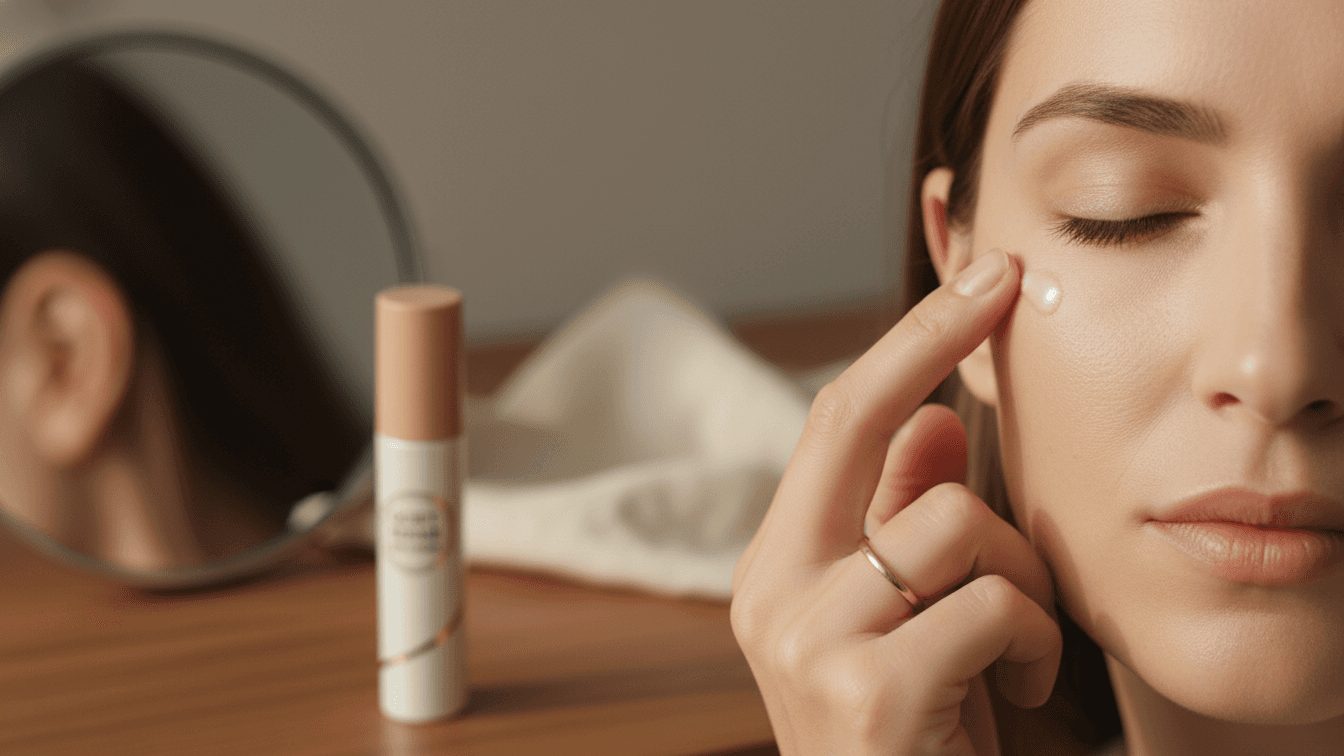
Use a grain‑of‑rice amount for each eye. Tap it gently along the orbital bone—under the eye and up toward the outer corner—using your ring finger. Avoid getting too close to the lash line; the product will travel slightly as it warms on your skin. Morning and night is ideal, but even once a day can make concealer sit more smoothly.
What eye creams can and cannot do
A good eye cream can soften the look of fine lines caused by dryness, help makeup crease less, and make the area feel more comfortable. It can support the appearance of dark circles and puffiness, especially when they are linked to dehydration or irritation. It cannot erase hereditary circles or change bone structure—those are simply part of your face, and they are allowed to stay.
Why the eye area needs its own approach
The skin around your eyes is thinner and has fewer oil glands than the rest of your face. That makes it more expressive—and more vulnerable to dryness, fine lines, and irritation from strong actives. A formula that feels fine on your cheeks can be too much this close to the lash line.
When an eye cream is worth adding
If you notice tightness, makeup settling into fine lines, or your regular moisturizer creeping into your eyes, a dedicated eye product can help. Look for textures that are cushiony but not heavy, with ingredients that focus on hydration, soothing, and subtle brightening rather than aggressive exfoliation.
How to apply eye cream without overdoing it
Use a grain‑of‑rice amount for each eye. Tap it gently along the orbital bone—under the eye and up toward the outer corner—using your ring finger. Avoid getting too close to the lash line; the product will travel slightly as it warms on your skin. Morning and night is ideal, but even once a day can make concealer sit more smoothly.
What eye creams can and cannot do
A good eye cream can soften the look of fine lines caused by dryness, help makeup crease less, and make the area feel more comfortable. It can support the appearance of dark circles and puffiness, especially when they are linked to dehydration or irritation. It cannot erase hereditary circles or change bone structure—those are simply part of your face, and they are allowed to stay.
Why the eye area needs its own approach
The skin around your eyes is thinner and has fewer oil glands than the rest of your face. That makes it more expressive—and more vulnerable to dryness, fine lines, and irritation from strong actives. A formula that feels fine on your cheeks can be too much this close to the lash line.
When an eye cream is worth adding
If you notice tightness, makeup settling into fine lines, or your regular moisturizer creeping into your eyes, a dedicated eye product can help. Look for textures that are cushiony but not heavy, with ingredients that focus on hydration, soothing, and subtle brightening rather than aggressive exfoliation.
How to apply eye cream without overdoing it
Use a grain‑of‑rice amount for each eye. Tap it gently along the orbital bone—under the eye and up toward the outer corner—using your ring finger. Avoid getting too close to the lash line; the product will travel slightly as it warms on your skin. Morning and night is ideal, but even once a day can make concealer sit more smoothly.
What eye creams can and cannot do
A good eye cream can soften the look of fine lines caused by dryness, help makeup crease less, and make the area feel more comfortable. It can support the appearance of dark circles and puffiness, especially when they are linked to dehydration or irritation. It cannot erase hereditary circles or change bone structure—those are simply part of your face, and they are allowed to stay.
Summary
Eye care is less about chasing miracles and more about comfort and support. A well‑chosen eye cream, applied with a light touch, can hydrate, smooth, and protect this delicate area so makeup and expression both sit more gracefully.
Summary
Eye care is less about chasing miracles and more about comfort and support. A well‑chosen eye cream, applied with a light touch, can hydrate, smooth, and protect this delicate area so makeup and expression both sit more gracefully.

More rituals worth reading
More rituals worth reading
More rituals worth reading


Ritual Notes, in Your Inbox
Monthly skin lessons, early access to launches, and quiet offers for subscribers only—no noise, just a calmer routine.
Email Address
Ritual Notes,
in Your Inbox
Monthly skin lessons, early access to launches, and quiet offers for subscribers only—no noise, just a calmer routine.
Email Address
Ritual Notes, in Your Inbox
Monthly skin lessons, early access to launches, and quiet offers for subscribers only.
No noise, just a calmer routine.
Email Address